
At the time of writing this, I’m currently an integrated Master’s (MSci) student in Cell Biology at University College London, and will start my PhD at King’s College London in September 2023. In this blog post I will share some of my experiences and tips regarding PhD applications in the life sciences.
It became clear to me quite early on in my studies that I want to spend my career solving great problems in biology, and that regardless of whether I want to have a career in industry or academia, a PhD degree is kind of a necessity. Because I knew that PhD programmes (and generally the job market) in London is quite competitive, I tried hard since my first year of university to get the best grades and to have as much exposure to research as possible. Instead of just doing a BSc, I ended up choosing the four-year MSci route on my degree, which also allowed me to spend a year abroad at Caltech. By the end of my third year, I managed to get a few research projects on my CV, good grades from both UCL and Caltech, references from high-profile professors, and thus I was ready to apply for PhDs.
Before writing any applications, I looked at the available programmes (for personal reasons I was only interested in London-based ones) and considered the following aspects:
- Am I really passionate about this subject?
- I’ve received advice from various people, and some said it doesn’t really matter what you work on during you PhD, so long as you gain good research experience. However, I just don’t see myself waking up every morning for 4 years doing something I am not 100% passionate about, so I decided to make this an important criterion.
- Will this PhD restrict me to being an academic forever?
- I wanted to make sure that whatever I do will not limit me to a certain career path 5-10 years from now. While doing a PhD in a niche field can give you some transferable skills, I knew I wanted to do a project that would provide me with skills that are entirely transferable between academia, and industry.
- Does it pay the bills?
- Unfortunately, PhD students make a ridiculously small amount of money, especially considering that some spend 50-60 hours working each week. I’ve accepted that I won’t get rich in the 4 years, but it would be nice to at least get financially independent from my family. Some programmes pay around 19K £/year, which is simply not enough for anything in London. Luckily there are programmes paying around 25K £/year. So yes, this was also a factor I took into account, and no, you should not mention this anywhere in your application!
- Some extra factors:
- Does the programme have first-year rotations between different labs?
- Will I be able to publish a few times?
- Am I going to be able to meaningfully contribute to the work done in that department?
- Is the lab/department well-funded?
Instead of dividing my attention and writing dozens of mediocre applications, I focused on these three programmes:
- King’s College London – Wellcome Trust: Advanced Therapies for Regenerative Medicine
- Francis Crick Institute PhD programme
- Cancer Research UK, Center of London (CRUK CoL) programme (also works through the Crick portal)
For each programme the first stage of the application process was as follows:
- Basic details about the applicant
- CV
- Personal statement
- Why do you want to do a PhD?
- Why did you choose this programme?
- Which field of science interests you the most and why?
- What makes you a strong candidate?
- Work experience, internships, lab projects
- Achievements
- References
A key part at this stage is that you clearly demonstrate your interest towards the programme, and the specific field. For writing personal statements, I always like to start with something grandiose and dramatic, for example:
“While traditional medicine allows us to mitigate symptoms, it hardly ever fixes the root cause of pathologies. I believe this will soon change, as the tools of 21st century biology will revolutionise medicine, allowing us to selectively target cancerous cells, to augment faulty gene function, or to develop better disease models and therefore improve drug design. I wish to work in the field of ‘stem cells and regenerative medicine’ to be a part of this revolution, and I believe through this programme I could become a leading expert in this rapidly developing field.”.
It is after this that I get into the specifics and unpack what I have done in the past years and how those experiences will enable me to contribute to the field in question.
It definitely helps if you look at the most recent papers from the labs and group leaders that are on the programme, and you can even name them or list those subjects as your top interests. Researchers really want to see and hear that you are interested in their life’s work, and (sadly) they will not accept you just for being generally curious (a great systematic problem in my opinion). You also need to be able to show proof of relevant research experience coupled with references from academics. These references should ideally be from someone who directly worked with you, and not just some “year tutor” or other person from your course. You need to make sure that you seem like a risk-free choice, someone who can undertake a project without the need of having to be taught every little thing.
I got through the first stage at King’s and the Crick, and I am pretty sure I only failed for the CRUK CoL programme because one of my referees was late with their submission. (Obviously, these people are high-profile researchers/professors and I felt quite bad after emailing them multiple times that they should fill out another form for me.) Either way, the next stage of the application process was a panel interview, which usually consists of the following:
- A presentation about a research project you participated in. Followed by questions from the panel. Usually 10 mins. This section is partially there to make you feel comfortable, and talk about something you are an expert on. Because usually the panel will not be an expert on the given topic, they will mostly ask you questions regarding the figures, the reproducibility of your analysis, how you arrived at your conclusions and so on.
- A presentation about a paper you choose from a given list. Followed by questions from the panel. Again, usually 10 mins. In this section, you are evaluated based on your ability to understand and critique someone else’s work. Since being a PhD student involves a lot of reading, and requires you to build your project on what has already been done by others, these skills are crucial. Common questions include “Why did you choose this paper?”, “Do you believe their conclusions?” and “Which experiment was the most convincing?”.
- Interview questions (another 10-15 minutes), such as:
- How do you manage your time?
- Assume an experiment fails, or you get stuck. How do you solve such problems?
- What do you think will be the toughest part of your PhD journey?
- How do you handle interpersonal conflicts?
- Where do you see yourself in 10 years?

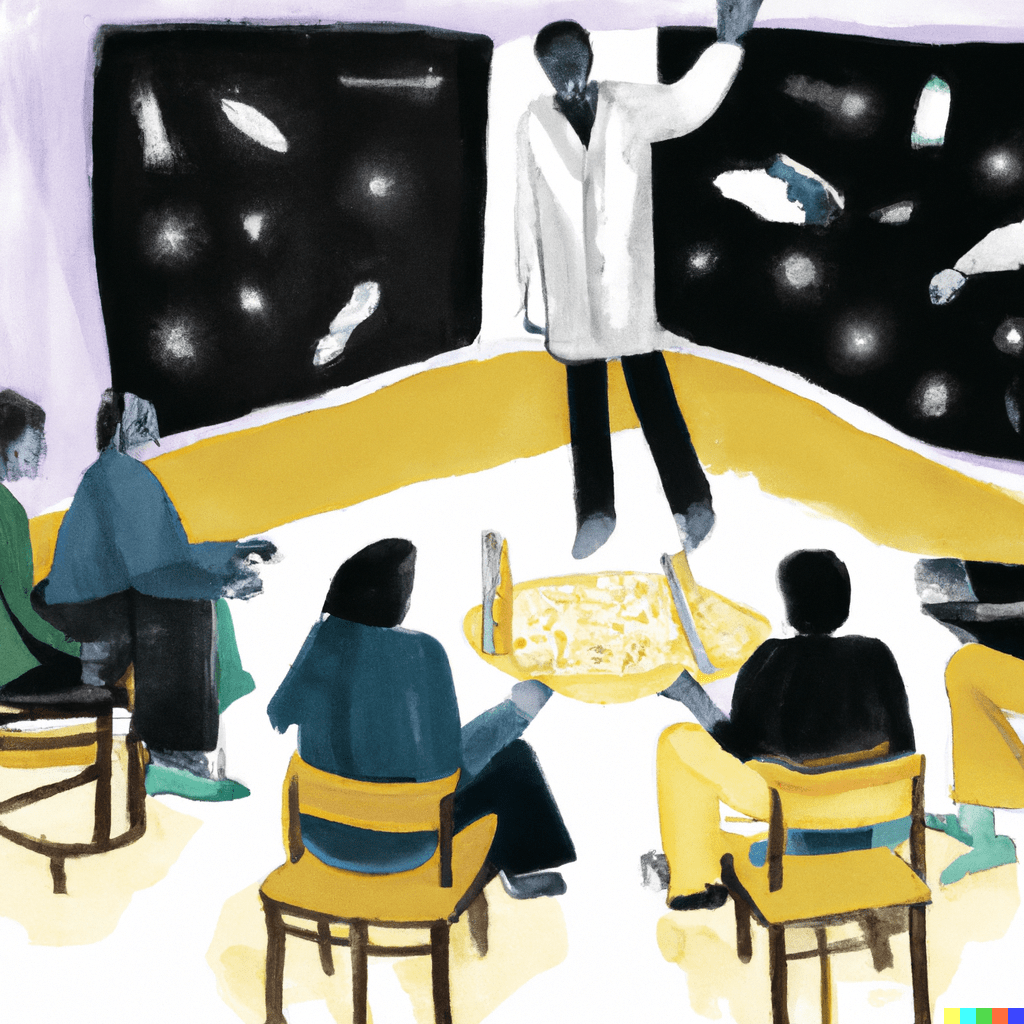
In total, the interview takes about 35-45 minutes. The programme at King’s organised an informal post-interview session with the current PhD students, which was really useful and a great fun. At the Crick they invited successful candidates to an open day and lab visits before the final decision was made. In most places you are usually notified within a week or so.
Unfortunately, I wasn’t given an offer at the Crick, because the project I was most interested in belonged to a group that was leaving the institute and therefore they announced in the very last second (even past the panel interview stage…) that they are not recruiting anymore. I was devastated when I found out that my application was unsuccessful, especially for circumstances beyond my control, and I wished I had applied for more programmes. Perhaps my most important advice is to apply for at least 5 or more studentships. Of course, there is no point in writing a half-assed mediocre application, as I said before, but three may have been too few. At that point, I even submitted an application to the Queen Mary University of London MRC Doctoral Training Partnership Programme in Translational Biomedical Sciences programme (the application process same as previously), whom I still haven’t heard back from. Luckily, I was successful with my application at King’s and honestly, I am much happier with this programme than I would have been with the Crick. So in the end everything worked out (as it always does).
If you are an undergraduate thinking of pursuing a career in science, and therefore getting a PhD, here are the most important things you can do right now:
- Make sure you understand what a PhD involves, and what you are getting into. I am only getting started on this journey, but luckily through my research projects, and because at Caltech I was taking classes with PhD students, I am well aware of what a PhD really entails.
- Get at least 2-3 internships before you apply. A significant portion of both the written and interview parts of the applications depend on this. If you finished your undergrad without any research experience, you might want to spend one year as a technician or research assistant before you make your application. Getting some experience will also help you with the previous point.
- Have at least an upper-second (2.1) average at uni. In 2023, going to a top university means literally nothing. It is one bullet point on your CV, that’s all it is. Getting decent grades is a serious requirement though, and shows how much you care about your daily work.
- Work on your CV. This may come naturally to people preparing for corporate careers, but most life sciences students have no experience at this. When I started university I did not have a CV at all, mostly because I haven’t done anything worth mentioning. Then I started out with a very basic draft, and I have updated it every 3-4 months since then. 3.5 years later I can barely fit my experiences and relevant skills on a single page, and I am confident about every single line on there.
- Improve your presentation skills. It really matters how good you are at presenting your own and other people’s research. Not just for the interview, but also for your future career.
- Pick up new skills, and learn how to code. I feel like people learn the most during their undegrad years, while they are not under pressure to produce “real work” and publish all the time. Therefore most of what you will base your future work on is the stuff you are currently studying. Familiarise yourself with different tools and make yourself a versatile scientist. In the case of biology, we are certainly moving in the direction where being computationally literate is crucial. If you are only useful at the bench-side soon you might not be worth more than a pipetting robot. Be versatile, and learn how to code and make reproducible analysis using open-source tools.

 Bence Kover
[…] data analysis and scientific writing. (These are exactly the kind of skills that will make you a desirable PhD candidate and will make you succeed at interviews.) It is easy to see how the acquisition of these skills is directly related to the number of […]
LikeLiked by 1 person